Signs Your Aircon Needs Servicing
Weak airflow, dusty filters, slow cooling or a light musty smell? The signs your aircon is due for servicing, and when it needs more than that.
· 4 min read
You know how an aircon rarely fails in one go? Most units fade slowly over weeks, so the signs aircon needs servicing are easy to miss until the bedroom stops feeling cool.
Brian started Cool Earth Aircon in 2007 as a one-man workshop. The same slow pattern still shows up in Ang Mo Kio flats today.
According to Home & Decor, the aircon makes up about 37 per cent of the electricity used in a typical Singapore home. A unit that struggles quietly adds to that bill every month.
This guide is for HDB, condo and landed home owners who want to know whether a routine service is due now, or whether the unit needs something more. We’ll cover the five common signs, how to tell servicing from repair, and what to do next.
The Common Signs Your Aircon Needs Servicing
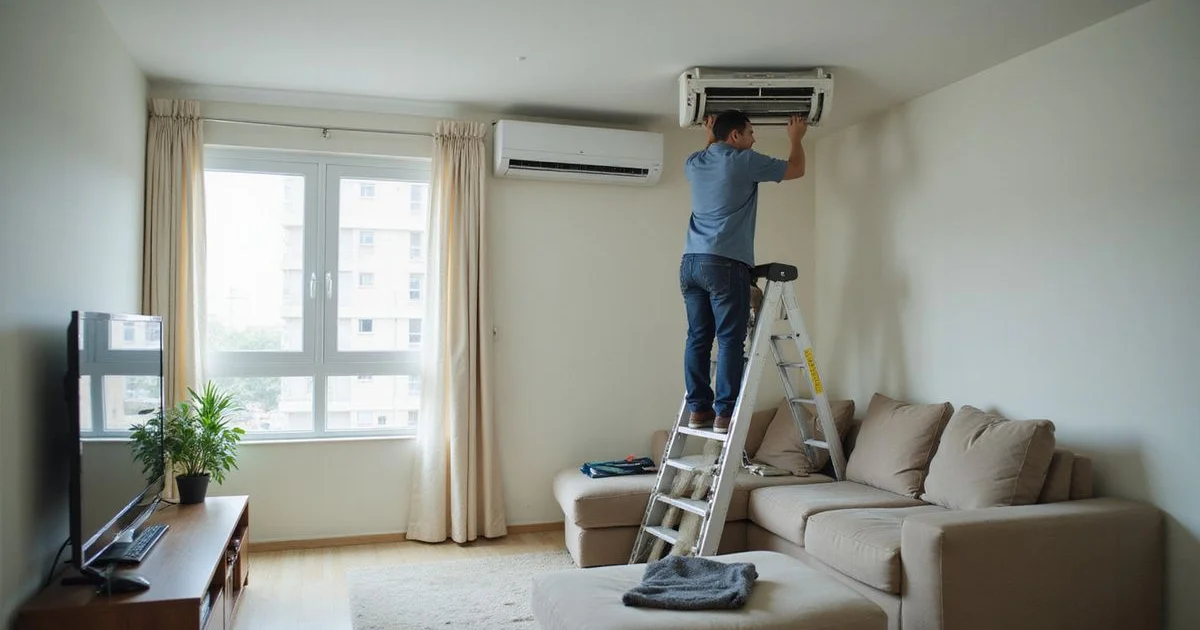
If you notice two or more of the signs below, it is time to book aircon servicing in Ang Mo Kio. A general service covers the filter, evaporator coil, drain line, drain pan, refrigerant pressure, thermostat, electrical parts and a final airflow and temperature test.
-
Weak airflow. Hold your hand under the vent on high fan. If the air feels soft compared with when the unit was new, the filter and coil are probably coated in dust. Air cannot pass through a blocked filter, so the fan works harder for less result. One Singapore servicing company, Prima Services, estimates that dirty filters alone can raise energy use by 5 to 15 per cent.
-
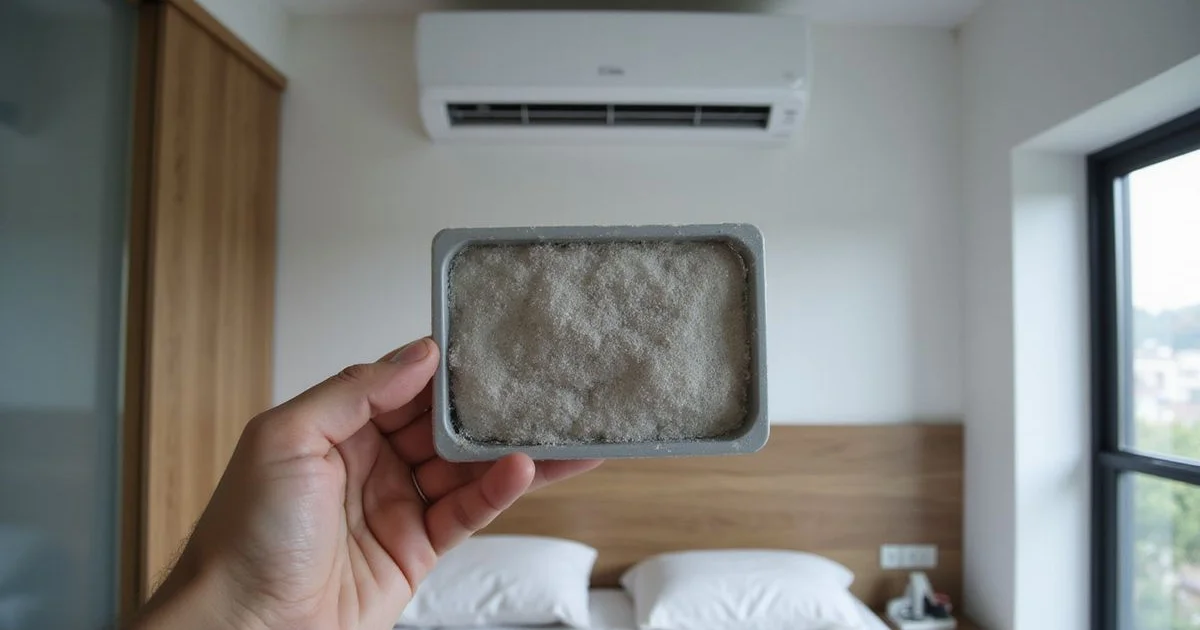
Dusty filters. Open the front panel and lift the filter. A grey, furry layer you can wipe off with a finger means the filter has been working past its limit. NEA advises checking the filter monthly, and a unit running every day may need a rinse every two weeks. Dust that gets past the filter settles on the coil, which you cannot reach.
-
The room takes long to cool. A bedroom that used to feel cool in ten minutes now takes half an hour, or never quite gets there. Dirty coils cannot absorb heat well, so the unit runs longer to do the same job.
-
A light musty smell at start-up. A faint damp smell in the first minute after switching on is an early warning. Moisture and dust in the coil and drain pan are starting to grow mould, and Singapore’s humidity speeds that up.
-
Six months or more since the last service. Even if nothing seems wrong, a unit used daily for six months has built up dust and slime inside. Problems usually show up soon after, which is why NEA also recommends an inspection at least once a year.
Quick self-check
Weak airflow plus a dusty filter plus slower cooling is the classic pattern of a unit that is simply due for servicing. One sign alone is worth watching. Two or more is worth booking.
When the Signs Point Beyond Routine Servicing
A routine service fixes dust and light build-up. It does not fix heavy mould, refrigerant leaks or failed parts. The table below helps you tell them apart.
| What you notice | Likely cause | What usually fixes it |
|---|---|---|
| Weak airflow, dusty filter | Dust on filter and coil | General servicing from S$50 |
| Light musty smell that fades | Early mould in coil or drain pan | General servicing |
| Strong sour smell, black specks blowing out | Mould on blower wheel and coil | Chemical wash from S$80 or chemical overhaul S$130 to S$180 |
| Blowing warm air even after servicing | Low gas or a failed part | Not cold repair from S$60 |
| Water dripping from the indoor unit | Choked drain line or drain pan fault | Water leak repair from S$60 |
| Rattling or grinding noise | Loose cover, fan motor or capacitor | Noisy aircon repair from S$60 |
If the room still does not get cold after a service, the problem is no longer dust. Low refrigerant usually means a leak somewhere in the copper piping, and a part like a capacitor or thermistor can fail on its own. In those cases the technician will explain the fault and quote the aircon repair before doing any work.
A smell is the sign most people misread. A faint smell that disappears after a minute is usually handled by a normal service. A smell that lingers, or gets worse when the unit runs for a while, means mould has spread deeper than a service can reach.
Older units in Ang Mo Kio’s 1970s and 1980s blocks often reach this point. Ang Mo Kio was Singapore’s seventh new town, and some of its oldest HDB blocks date back to 1976. If your unit has gone a year or more without a deep clean, expect to need more than a routine visit.
What to Do Next
Start by looking at the calendar. Daily-use units in Singapore’s heat and humidity do best with servicing every 3 to 4 months, as explained in our guide on how often to service your aircon. If you are past that point and seeing the signs above, a general service is the right first step.
Before the visit, you can buy yourself some time with a few simple steps:
- Rinse the filters on each unit, which takes about five minutes per unit.
- Read our guide on cleaning filters yourself vs calling a technician to see what is safe to do at home and what is not.
- Read what happens during aircon servicing if you want to know exactly what the technician will check.
When you book, mention the signs you have noticed. If they point beyond servicing, the technician can check for that on the same visit and give you a fixed quote before any extra work. There is no callout fee, payment is after the job, and the work carries a 90-day workmanship warranty.
Catching the signs aircon needs servicing early is the cheapest way to keep a unit cooling well. A routine service at the right time costs far less than a deep clean or repair later, and it keeps the electricity bill from creeping up while the unit struggles.
If two or more of these signs sound familiar, book a general service for your 2 to 4 units in one visit and tell us what you’ve noticed.
Next step
Learn more about aircon servicing in ang mo kio
General servicing from S$50 for 1 unit, with a fixed quote first, no callout fee and a 90-day workmanship warranty.