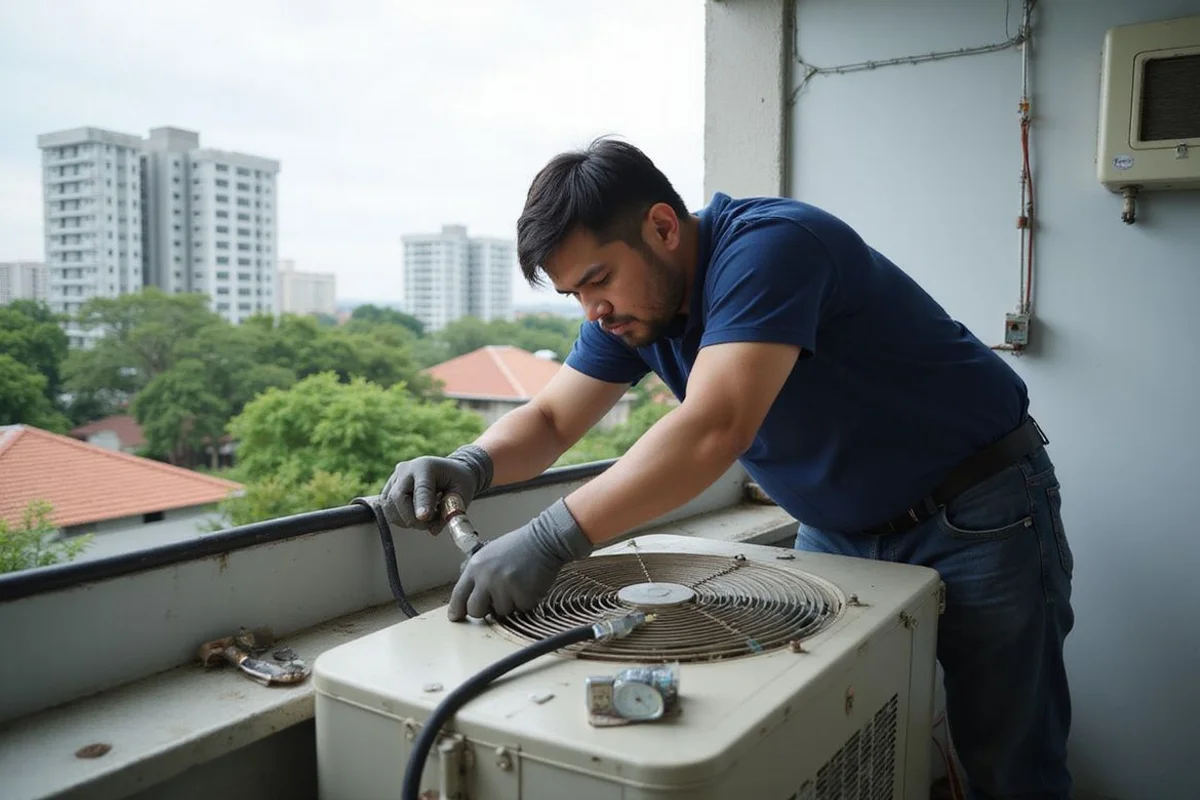
What is an aircon gas top-up?
Is your aircon running all day while the room still feels warm? Low refrigerant is a common cause, and an aircon gas top-up is usually what people ask for first.
Aircon Servicing Ang Mo Kio is the Ang Mo Kio service of Cool Earth Aircon, which Brian started in 2007 as a one-man workshop. Gas questions come up in HDB flats all the time, so here’s the plain version.
Your aircon cools by moving refrigerant, often called gas, between the indoor unit and the outdoor condenser unit. When there isn’t enough, the room takes longer to cool and the air feels weak. The compressor also works harder for less.
A gas top-up adds refrigerant back to the right operating pressure.
Here’s the part many people aren’t told. An aircon is a sealed system, so it doesn’t use up gas the way a car uses petrol.
If the gas level is low, there’s a leak somewhere, even a very small one.
A top-up alone only buys time. That’s why every top-up we do includes a leak check and a pressure test.
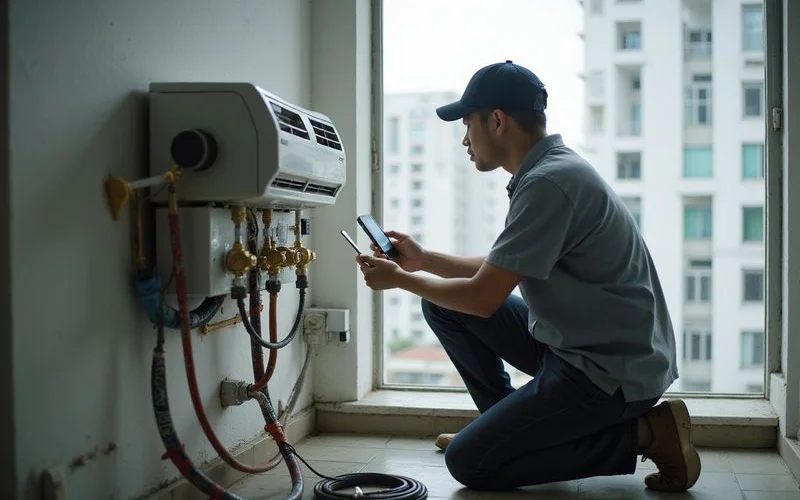
Which refrigerant types do we handle?
We top up R22, R410A and R32 systems. R22 is found on many older non-inverter units, including some still running in older Ang Mo Kio flats. R410A and R32 are used in newer inverter units and multi-split systems.
The technician reads the label on the outdoor unit first. Each gas runs at a different pressure, and they must never be mixed. Engineering guides such as the one from Aircon Spares say the same about R32 and R410A: even though both turn up in newer units, they can’t share a system.
| Refrigerant | Where you’ll usually find it | Global warming potential | Typical starting price per top-up |
|---|---|---|---|
| R22 | Older non-inverter units | 1,810 | From S$150 |
| R410A | Newer inverter and multi-split units | 2,088 | From S$120 |
| R32 | Newer inverter units | 675 | From S$80 |
The prices are indicative starting figures from FixMove’s 2026 Singapore guide. The global warming figures come from AC Direct and aircons.sg. Your final amount depends on how much gas the unit needs once the leak check is done.
How does the technician check for a leak?
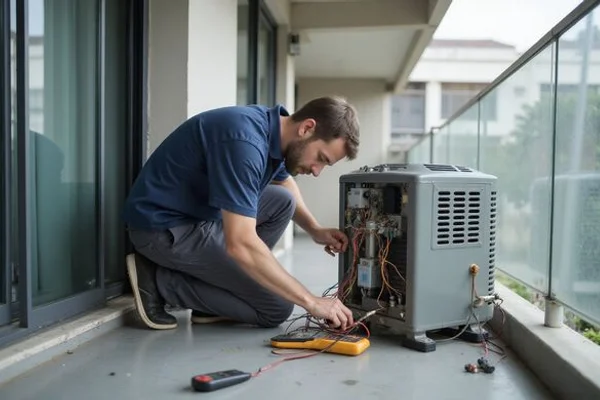
The technician connects a manifold gauge to the service valve on the outdoor unit. The gauge reads the pressure on the suction line while the system runs.
Then the likely leak points get checked:
- Each flare joint where the copper piping connects to the units
- The valves
- Any exposed or damaged pipe on the aircon ledge
Oily marks at a joint are a common clue. According to Singapore servicing firm SACES, refrigerant carries compressor oil out through the leak, and that oil leaves a residue on the metal around it.
For a leak that is hard to find, a nitrogen pressure test may be suggested and quoted before any work. The test uses dry nitrogen instead of refrigerant. SJR Aircon puts a standard home test at 30 to 60 minutes per system.
When should you book a gas top-up?
Book a check when any of these show up:
- Cooling has dropped slowly over weeks or months
- You see ice on the copper pipe
- The compressor seems to run and run without cutting off
Here’s a handy rule of thumb from Billy Aircon. A healthy unit blows air roughly 10 to 12 degrees cooler than the room. If yours falls well short after a filter wash, low gas is a suspect.
These signs can also come from a dirty coil or a blocked filter, so the pressure reading tells us which one it is. If the pressure is fine, we’ll say so. You’ll get pointed to general aircon servicing or a chemical wash instead of being sold gas you don’t need.
Common Problems We Solve
Slow loss of cooling over months
The unit still runs, but each month the room takes a little longer to cool. This slow fade is typical of a small leak. Snowflake Aircon notes that leaks rarely happen all at once, and most start at joints, flare connections or corroded spots on the copper piping.
The pressure test confirms it, and the leak check shows where the gas is going.
Ice on the copper pipe
Frost or ice on the copper pipe or coil often points to low refrigerant pressure, though a very dirty coil can cause it too. Billy Aircon points out that Singapore’s average humidity of around 84% meets the freezing copper and turns to ice, which is why this sign is so common here.
Running the unit with ice on it puts extra load on the compressor. Do this instead:
- Switch the unit off.
- Take a photo of the ice and the outdoor unit label.
- Book a check.
Our not cold repair page covers the other causes of warm air.
Hissing sound and oily marks at joints
Gas is usually escaping at a joint if you notice either of these:
- A faint hiss near the pipes
- An oily stain at a flare joint
Tightening or redoing the joint is often a small job, quoted before work.
Top up gas or fix the leak first?
The right answer depends on the leak and the age of the unit:
- Slow leak, older unit: a top-up may keep it cooling for a while, and we’ll say that plainly.
- Leak at one joint or one damaged pipe: fixing it first usually saves money, because you only pay for the gas once.
You get both options and both prices, then you choose.
If your unit still runs on R22, weigh up supply too. FixMove, citing NEA, says Singapore will completely phase out HCFC consumption by 1 January 2030, with annual quota reductions from 2026. R22 gas is likely to get harder to source, so think twice before putting a lot of money into an old unit.
Bigger faults go to our aircon repair team, and replacement enquiries are handled by Cool Earth Aircon at coolearth.com.sg.
Why not just keep topping up?
Running an aircon low on gas is hard on it. Here’s what happens:
- The compressor runs longer to reach the set temperature.
- The electricity bill creeps up.
- The coil can ice over and stop cooling altogether.
Each top-up also costs money, and older gas isn’t cheap. The aircons.sg cost guide puts R22 wholesale at roughly S$25 to S$50 per kg, against S$8 to S$12 per kg for R32.
A slow leak that needs gas every few months soon costs more than fixing it once. That’s why the leak check is part of every visit, not an add-on.
Booking a gas top-up in Ang Mo Kio
Ready to book an aircon gas top-up? WhatsApp us these details:
- The number of units
- The symptoms
- Your address
- Photos of the outdoor unit label and any ice on the pipes
The photos help the technician bring the right refrigerant.
Technicians travel from Simei by the CTE and usually reach Ang Mo Kio within 90 minutes of a confirmed booking, with same-day slots subject to availability.
See the full price list for every service, or contact us to book.