Cleaning Aircon Filters Yourself vs Calling a Technician
How to clean aircon filters safely between visits, what DIY cannot reach (coil, blower, drain line) and when to book a technician.
· 4 min read
Can You Clean Aircon Filters Yourself?
Yes, and you should. Cleaning aircon filters yourself is the one job most owners can do safely at home, and it makes a real difference between technician visits.
NEA’s energy-saving tips advise checking the air-con filter once a month and cleaning or replacing it when needed. The air-con also took about 24% of a typical Singapore home’s electricity in NEA’s 2017 household survey, so a clogged filter costs you money.
We’ve serviced aircon in Singapore since 2007, and filters are only the first layer. Behind them sit parts that collect dust and mould, and you can’t safely reach them. Below, we show where DIY stops and professional aircon servicing takes over.
How to Clean Aircon Filters Step by Step
You need no tools for this. It takes about 10 to 15 minutes per unit, so a flat with 3 wall-mounted units takes roughly 30 to 45 minutes.
- Switch the unit off at the remote and at the power switch. Never open the panel while the unit is running.
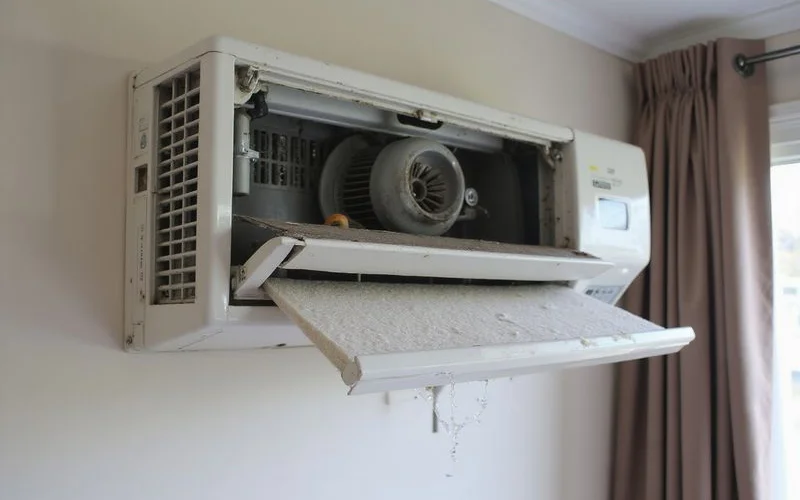
- Lift the front panel. On most wall-mounted units it swings up from the bottom edge until it clicks open.
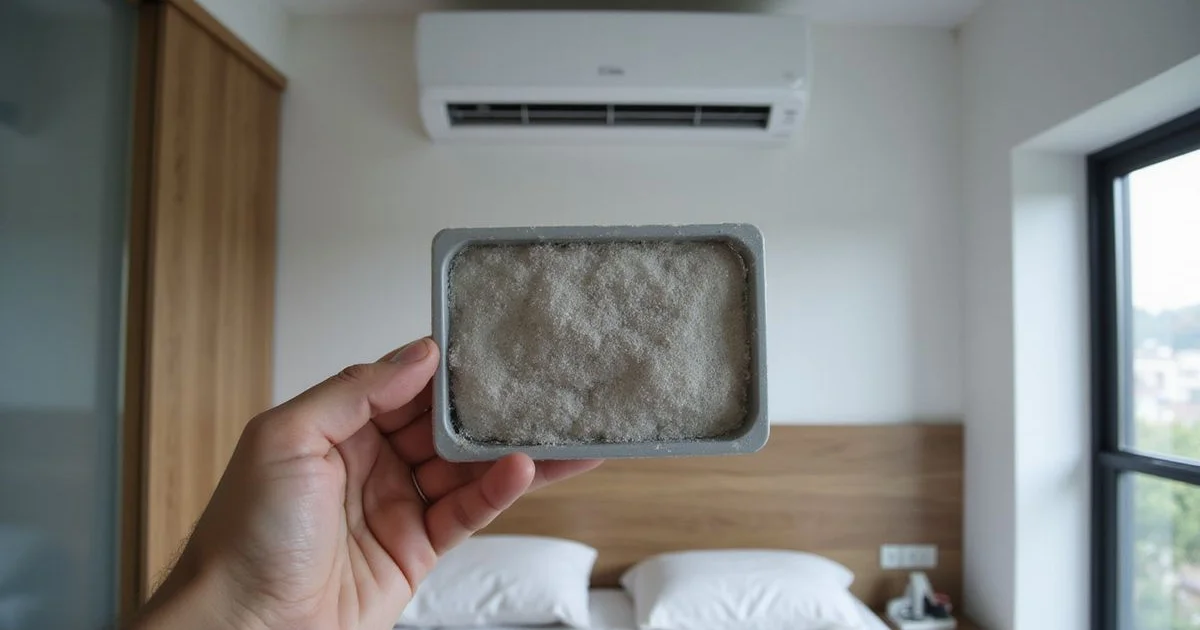
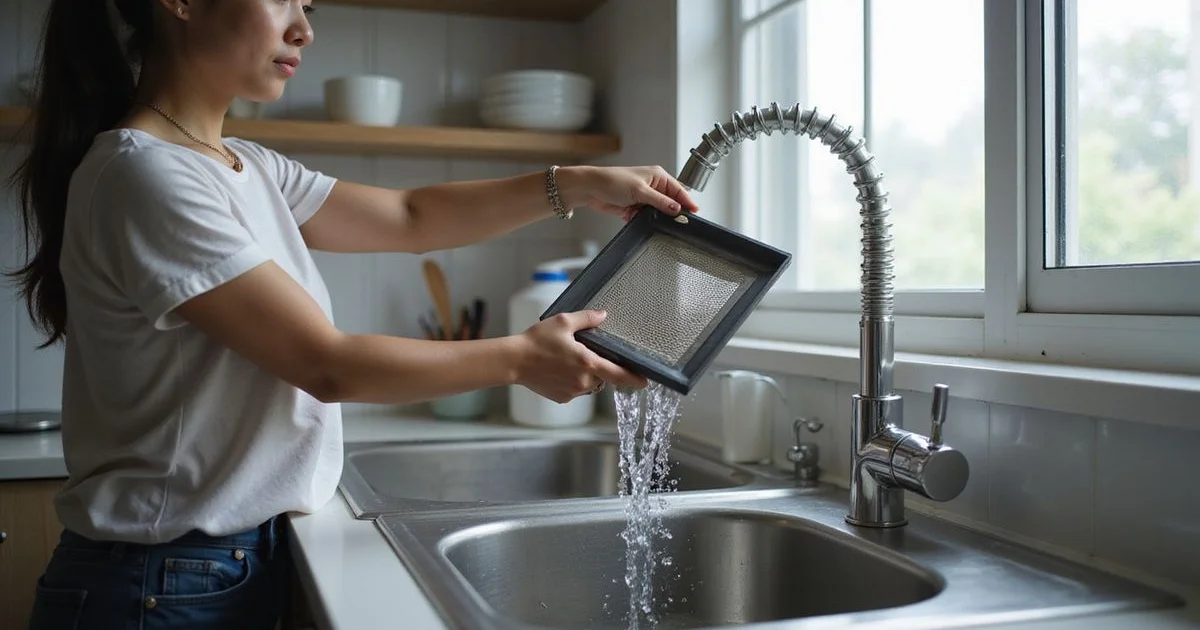
- Slide the filters out. They are usually two plastic mesh sheets. Pull them down and out gently.
- Rinse with tap water. Hold the filter under running water from the back, so dust is pushed out the way it came in. Use a little mild dish soap if it is greasy. Do not scrub hard or use a brush that can tear the mesh.
- Let them dry fully in the shade. Do not put wet filters back, and do not dry them in direct sun, which can warp the plastic.
- Slide them back and close the panel. Make sure they sit in their tracks before switching on.
Do this every 2 to 4 weeks for units used daily. NEA’s once-a-month check is the minimum, and bedroom units that run all night collect dust faster.
Safety first
Only remove the filters. Do not spray water or cleaner into the unit, and do not try to reach the coil or fan with a cloth. The electrical parts sit very close to the coil.
What DIY Cannot Reach
Everything behind the filters is off-limits for a home clean. Once the filters are out, you will see the evaporator coil, a set of thin metal fins, and below it the blower wheel, a long drum with curved blades. Out of sight are the drain pan and the condensate drain line.
| Part | Can you clean it yourself? | Why it matters |
|---|---|---|
| Air filters | Yes, every 2 to 4 weeks | Keeps airflow strong between visits |
| Evaporator coil | No | Dust here slows cooling and feeds mould |
| Blower wheel | No | Mould on the blades causes smells and black specks |
| Drain pan | No | Sludge here causes leaks and sour smells |
| Condensate drain line | No | A choked line makes water drip from the unit |
| Refrigerant and electrics | No | Needs gauges and trained hands |
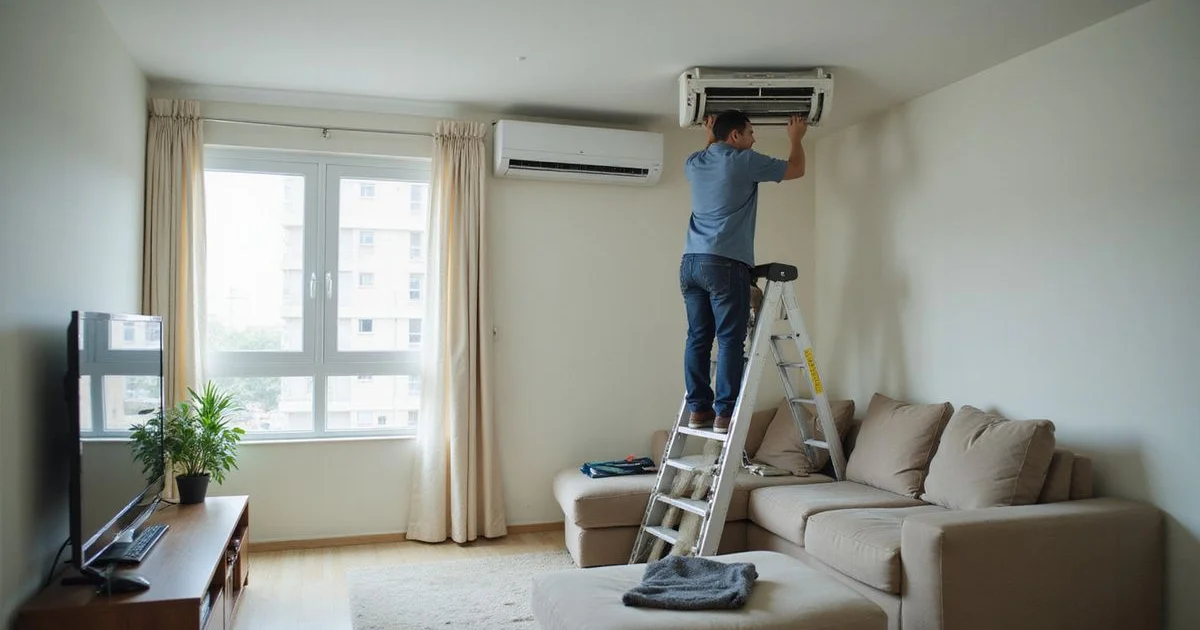
The coil fins bend easily, and pushing a cloth or brush into them damages them. The blower wheel sits deep in the unit and needs either a chemical wash on the wall or a full dismantle to clean properly.
The drain line needs a flush with a pump. One Singapore servicing company, Billy Aircon, says a clogged drain pipe causes over 60% of the leak cases it attends in HDB estates, Ang Mo Kio included.
These jobs are all part of what a technician does on every visit. See what a technician cleans for the full 8-point list.
The Risks of DIY Sprays
Foam and spray cleaners sold for home use promise to clean the coil without a technician. They come with real risks:
- Liquid on electrics. It can run onto the PCB control board or the fan motor connections.
- Sludge in the drain. Foam can wash dirt down into the drain pan, where it chokes the drain line.
- Residue on the coil. Leftover cleaner can attract more dust.
That is how a quick home clean can turn into a leak or a smell that needs a technician anyway.
Other Things You Can Safely Do at Home
A few small habits help between visits, and none of them involve opening the unit:
- Wipe the outside of the indoor unit and the vent louvres with a dry cloth.
- Keep furniture and curtains from blocking the airflow.
- Keep the outdoor unit on the aircon ledge clear of plants, laundry and stored items. It needs free air to release heat, and installers commonly advise at least 30cm of clearance around it.
- Run a rarely used unit for a while every week or two, so the coil and drain pan dry out instead of staying damp.
You can also set the temperature to 25°C. NEA says each degree you raise it saves about 3% of utility costs.
When to Book a Technician
Keep rinsing the filters, and book a technician when any of these apply:
- It has been 3 to 4 months since the last service on a daily-use unit
- Airflow is weak even with clean filters
- The room takes much longer to cool than it used to
- There is a musty or sour smell at start-up
- Water drips from the indoor unit
- You see black specks blowing out
Match the symptom to the fix:
- Weak cooling or smells that come back after servicing usually mean the blower and coil need a chemical wash, from S$80 per unit.
- Heavy mould or sludge calls for a chemical overhaul at S$130 to S$180 per unit.
- Dripping water points to a water leak repair.
For a full list of warning signs, read the signs your aircon needs servicing.
Rinsing filters at home and booking a technician every few months work together. The first keeps the unit breathing between visits, and the second cleans everything you cannot reach. General servicing starts at S$50 for 1 unit, with a fixed quote before work and a 90-day workmanship warranty. If your Ang Mo Kio flat has 2 to 4 units, book them all in one visit and we’ll sort out the lot.
Next step
Learn more about aircon servicing in ang mo kio
General servicing from S$50 for 1 unit, with a fixed quote first, no callout fee and a 90-day workmanship warranty.